

 Chigozie Ibik
 Capitalism is an economic system where private individuals own and control the means of production. It allows individuals or groups to invest their resources in producing goods and services to meet societal needs, retaining all profits and bearing any losses. Like other economic systems, capitalism addresses key questions: what to produce, how to produce, when to produce, in what quantities, and for whom the products are intended. The significance of capitalism in modern times is immense.
Historically, noblemen owned means of production, such as buildings, farmlands, vineyards, shipyards, ships etc. Among various economic systems, capitalism has proven to be the most competitive in driving economic development. It fosters innovation and competition among businesses, leading to improved products, technology, and living standards. This system is widely accepted globally due to its numerous advantages. Capitalism also has its drawbacks, including environmental degradation, unequal distribution of wealth, unfair business practices, a widening social class divide, labor exploitation, monopolies, and an often-irresistible short-term focus on profitability over long-term sustainability.
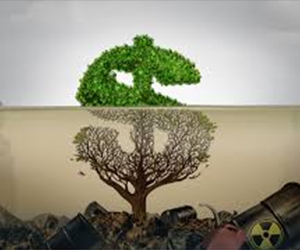
The environmental challenges experienced over the years have led to a re-evaluation of the term “capitalism”, giving rise to the concept of "sustainable capitalism". Labeling activities as "sustainable" does not necessarily make them so. Traditional capitalism often prioritizes resource extraction and use with less regard for environmental impacts, a practice foundational for many businesses.
A shift in such principles can be likened to teaching an old man accustomed to riding a tricycle to ride a bicycle—there will be falls, rises, and severe learning challenges associated with age, preference and habits, which may seem unattractive. Similarly, many businesses today, accustomed to old methods, find embracing new, environmentally friendly practices challenging rather than seeing them as a business objective.
Capitalism was never designed with sustainability in mind; its guiding principles did not account for the environmental impacts of business activities. The focus was on economic development, as evidenced during the Industrial Revolution, roughly between the 1760s and 1840s. Business owners of that era prioritized profitability and expansionism at the expense of society and the environment.
The increase in human population over the centuries further exacerbated environmental degradation, as businesses had diverse needs to meet. From the 1850s, we noticed a rise in earth's temperature, owing to green house gas emissions from business activities, a trend that became even more pronounced in the 1900s and remains a critical topic in many economic summits, forums and conferences today. The rising earth’s temperature has introduced new challenges in both the business and social landscapes.
Global warming, being a major topic of discussion, poses environmental risks to businesses and humans. Sustainable capitalism seeks to address these environmental challenges by integrating sustainable principles into business operations, marking a shift from traditional practices to more environmentally responsible ones. However, many businesses remain profit-oriented because one of the primary objectives of starting a business is to generate profit.
While some might argue that the purpose of starting a business is societal development, the reality is that any business not generating enough profit will likely go bankrupt and shut down. This would lead to social crisis - job losses, increase in crime rates, financial strain on the government, and difficulties for other connected businesses. There are companies embracing the term ''sustainable capitalism'' but still operating foundational principles of capitalism.
Answering this question is complex, because we can’t completely treat an ailment without attacking its source. Can activities without foundation in a particular principle be fully adapted to that principle? If businesses attempt to modify their operations without changing their core principles, how long will it be before they revert to their old ways? Conversely, if they alter their principles, how easy is it to adopt new practices? I believe a good starting point is matching words with action by redefining underlying principles to include sustainable development alongside profit.
Presently, businesses have begun embracing some sort of sustainable practice but is it enough to brand the business a sustainable capitalist venture? A new generation of workers are springing up with innovative ideas and different expectations from companies. Utilizing their new methods, technology, and AI-driven approach could be essential while launching ventures that prioritize sustainable development from the beginning but it gets challenging with already established businesses.
A key question - Will established companies with global operations easily embrace these new ideas? Acceptance would require investment in new assets, and modifications to supply chains and processes. It would also necessitate employee training and development, periods of operational drag, and initially lower profits due to learning curves—unpleasant but necessary steps for transformation.
A way forward
The critical concern is whether managers are genuinely prepared to implement the much-discussed business revamp or if they are merely delaying the inevitable under the guise of sustainable capitalism. If they are not genuine, their companies risk falling behind as new, environmentally-focused businesses continue to emerge each year. This rise of new ventures competing for market share with older businesses may have spurred the concept of "sustainable capitalism," where older businesses appear committed to addressing environmental issues to ease stakeholder pressure.
For many businesses, sustainable capitalism amounts to little more than green-washing, with their fundamental principles unchanged and their practices changed only superficially. While a complete business reset isn't feasible due to economic repercussions, the imperative remains to seek genuine transformation in business operations through fundamental adjustments.